


Many people stop and wonder when they write this word. Is it naive or nieve? You are not alone. This spelling trips up students, writers, and even careful editors. The word sounds like it has an “ee” sound in it, and “ie” often makes that sound in English, as in “believe.” So naive vs nieve feels like a fair question.
Quick answer. Naive is the correct English spelling. It means lacking experience or trusting too easily. Nieve is not an English word. It is the Spanish word for snow. This guide explains naive vs nieve with meanings, sounds, examples, and simple memory tricks. Do not worry if you have typed it the wrong way. Almost everyone does at some point.
Naive vs Nieve: The Short Answer
Naive is the correct spelling in English. It is an adjective. It describes a person who lacks experience or trusts too easily. Nieve is not an English word. It is Spanish for “snow.”
If you are writing about a trusting, inexperienced person, use naive. If you are writing about snow in Spanish, use nieve. The rest of this guide shows how to use each one with confidence.
What Does Naive Mean?
Naive is an adjective. It describes a person, idea, or action that lacks real-world experience. A naive person often trusts others too fast. They may expect things to go well without checking the facts.
The word can be kind or critical. It depends on the setting. A child with a simple, childlike outlook may be called naive in a sweet way. An adult who ignores clear warning signs may be called naive in a sharper way.
You can use naive for ideas, too. A naive plan skips real problems. A naive question shows a beginner mindset. In science and data work, a naive approach means a basic first try with no special adjustments.
Here is a quick example: “It was naive of me to expect the bus to be on time during a storm.” The sentence admits poor judgment, but it stays gentle and honest.
What Does Nieve Mean?
Nieve is a Spanish noun. It means snow. It is a feminine word, so Spanish speakers say la nieve. It sounds like NYEH-beh, because the Spanish “v” sounds close to a “b.”
Here is an example: Hay mucha nieve en las montañas. In English, that means “There is a lot of snow in the mountains.” The Spanish verb nevar means “to snow,” and nieva means “it snows.”
Nieve does not mean naive in Spanish. The Spanish word for a naive person is ingenuo (or ingenua for a woman). So nieve belongs in Spanish text, in names, or in a lesson about Spanish vocabulary. It does not belong in an English sentence about someone’s trusting nature.
Read Related Post: Envisage vs Envision: Meaning, Difference, and Usage Explained
Naive vs Nieve Side by Side
This table shows the difference at a glance.
| Term | Correct in English? | Language | Meaning | Use |
| naive | Yes | English (from French) | Lacking experience, overly trusting | Everyday, work, and academic writing |
| naïve | Yes | English (from French) | Same as naive, with optional marks | Formal or traditional style |
| nieve | No | Spanish | Snow | Only in Spanish text or names |
The first two rows are the same word. The last row is a different word in a different language.
Why Do People Mix Up Naive and Nieve?

There are a few simple reasons. English has many “ie” words, such as believe, field, and niece. Our eyes expect that pattern. When a word has an “ee” sound, we often reach for “ie.”
Naive also does not follow the usual English rules. It came from French, so its letters work differently. In most English words, “ai” says “ay,” as in “rain.” In naive, the “a” and “i” are said as two separate sounds.
Spanish speakers who write in English may also see the likeness. Nieve is a real word they know, and it looks close to naive. The naive vs nieve mix-up is common for that reason. It says nothing bad about your skills. Spelling English is hard, and this word is tricky.
How Do You Pronounce Naive?
Naive is pronounced nye-EEV. It has two syllables. The stress falls on the second one.
Break it into two easy pieces. The first piece sounds like the word “nigh.” The second piece sounds like the word “eve.” Put them together, and you get nye-EEV.
You may also hear nah-EEV. Some speakers say it that way. Both are understood, but nye-EEV is the most common choice in American English.
Do not use the Spanish sound for nieve when you say naive. They look similar on the page, but they sound very different out loud.
Is It Naive or Naïve? Understanding the Two Dots
Both spellings are correct. The two dots over the “i” are called a diaeresis. They show that the “i” is said as its own sound, apart from the “a” before it.
In everyday American writing, many people drop the dots. You will see naive in news stories, emails, and blogs. You will also see naïve in some books and formal pieces. Both count as standard English spelling.
Pick one style and stick with it. If your site, class, or company has a style guide, follow it. If you type on a regular keyboard, naive is simpler.
Watch out for a different slip. Do not add an extra “e” and write naieve. That spelling is wrong in every form of English.
Where Does the Word Naive Come From?
English borrowed naive from French. The French word is naïve, the feminine form of naïf. French took it from the Latin word nativus. That Latin word meant “native,” “natural,” or “born.”
The idea is neat. A naive person is natural and unshaped by hard experience. They have not yet learned to be careful.
The same Latin root gave English the words native and nativity. This link will help you later, in the memory tricks section.
Nieve has a different history. The Spanish word traces back to the Latin word nix, which meant snow. So the two words have separate roots. Their likeness in spelling is just a coincidence.
Naive Word Forms: Naively, Naivety, and Naiveté
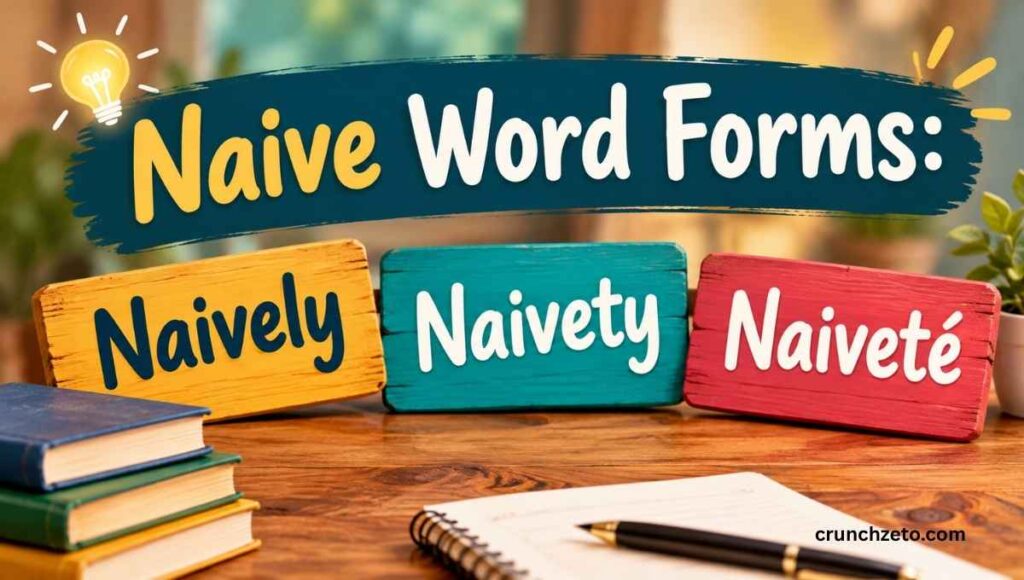
Naive has several related forms. Here is how each one works.
- Naive is the adjective. It has no plural. You can say “more naive” or “most naive.”
- Naively is the adverb. Example: “He naively trusted the stranger.”
- Naivety is the noun. Example: “Her naivety surprised us.”
- Naiveté (also written naivete) is another noun spelling. It keeps the French style.
Naivety is common in British English, and you will also see it in the US. Naiveté and naivete appear in American writing as well. All of these noun forms are accepted.
A naive person is the usual phrase for the person. English also has the rare word naif, but most writers skip it.
Naive works in casual talk and formal writing. It is not slang. It also works in academic papers.
How to Use Naive in a Sentence
Let’s look at real examples from different settings.
Everyday conversation: “I was naive to think he would pay me back.”
Workplace communication: “It would be naive to assume every client will renew.”
Email: “I may be naive, but I hoped the schedule would hold.”
Academic writing: “The study shows that a naive approach can miss key factors.”
Casual writing: “This might be a naive question, but how does this app work?”
Notice the pattern in the first two examples. The phrase “naive to think” or “naive to assume” is very common. It points out poor judgment in a polite way.
The email example uses naive as a soft opener. The writer admits a lack of experience first. That tone feels humble and friendly.
Common Mistakes With Naive vs Nieve
Mistakes happen to everyone. Here are the most common ones, with simple fixes.
Incorrect: She was too nieve to see the trick.
Correct: She was too naive to see the trick.
Nieve means snow in Spanish. English needs naive here.
Incorrect: Don’t be so naieve.
Correct: Don’t be so naive.
This version adds an extra “e.” Drop it.
Incorrect: His naive got him in trouble.
Correct: His naivety got him in trouble.
Naive is an adjective. After “his,” you need a noun, so use naivety.
Incorrect: Ella es muy nieve.
Correct: Ella es muy ingenua.
This one is for Spanish writers. In Spanish, nieve means snow, so the sentence says “She is very snow.” Use ingenua for “naive.”
When you face naive vs nieve in your own draft, ask one question. Is this about a trusting person or about snow? That check solves it fast.
Naive vs Innocent vs Gullible: What Is the Difference?

These words overlap, but they are not twins.
Naive means lacking experience and trusting easily. It focuses on a lack of worldly knowledge.
Innocent means free from guilt or harm. It can also mean pure. A baby is innocent. A person can be innocent of a crime without being naive at all.
Gullible means easily tricked. It is the most negative of the three. It suggests someone has been fooled or likely will be.
Here is a test sentence for each:
- “The naive intern believed every rumor.” (lacks experience)
- “The innocent child smiled at everyone.” (pure, harmless)
- “The gullible shopper fell for the fake coupon.” (easily deceived)
Some helpful synonyms for naive are inexperienced, unsophisticated, trusting, childlike, green, and credulous. Common opposites are experienced, worldly, savvy, sophisticated, and skeptical.
Easy Tricks to Remember the Spelling of Naive
A few small tricks can lock in the right spelling.
Trick 1: Naive is native without the t. Both words share the Latin root nativus. If you can spell native, you can spell naive.
Trick 2: Sound it out in two parts. Say “nigh” and then “eve.” Match the letters: n-ai and ve.
Trick 3: Link nieve to snow. Snow and ice go together. Nieve has the “i” and “e” of ice. If you mean snow in Spanish, use nieve. If you do not, it is naive.
Pick the trick that sticks best for you. Using it once or twice is usually enough. For naive vs nieve, the native trick works well for most people.
Naive vs Nieve FAQs
What is the difference in naive vs nieve?
Naive is an English adjective that means lacking experience or too trusting. Nieve is a Spanish noun that means snow. They are different words in different languages.
Is naïve with two dots correct?
Yes. The two dots are called a diaeresis. Naïve and naive are both correct spellings of the same word.
What does nieve mean in Spanish?
Nieve means snow. The phrase la nieve means “the snow.” It does not mean naive.
How do I use naive in a sentence?
Use it to describe a person or idea. For example: “It was naive to expect a quick answer.” You can also say “a naive question” or “a naive plan.”
Is naive a bad word?
Not always. It can be gentle, as in a child’s naive view. It can also be critical when it points to poor judgment. The tone depends on the context.
Can I write naivety instead of naiveté?
Yes. Both are accepted noun forms. Naivety is common in British English, and you will see it in American writing too.
Conclusion
Naive is the English word for someone who lacks experience or trusts too easily. Nieve is the Spanish word for snow. When you are unsure about naive vs nieve, write naive and move on. Spelling it right shows readers you care about details.
Remember the trick: naive is native without the t. Use naively for the adverb and naivety for the noun. The dots in naïve are optional. When in doubt, check the word against its meaning first. That one habit prevents most errors. Keep your spelling consistent, and your writing will look polished.

Oliver Matthew Wilson is a passionate English language and grammar writer who enjoys making grammar, spelling, vocabulary, and writing concepts simple and easy to understand. With a focus on clear explanations and practical examples, Oliver Matthew Wilson creates helpful content for students, writers, and everyday English learners. His goal is to make learning English more enjoyable, useful, and accessible to everyone.
